A studio condo bought 20% above market, and nearly 10 years of rising prices weren't enough
We helped sell an investment studio condominium in Ota City, Tokyo. It had been bought at 20% or more above the market price, and although prices rose with inflation over the following nearly 10 years, the gap never closed. This article explains how a studio bought "for tax savings" can hold back your own home loan through negative equity, and what to consider before taking out an investment loan.
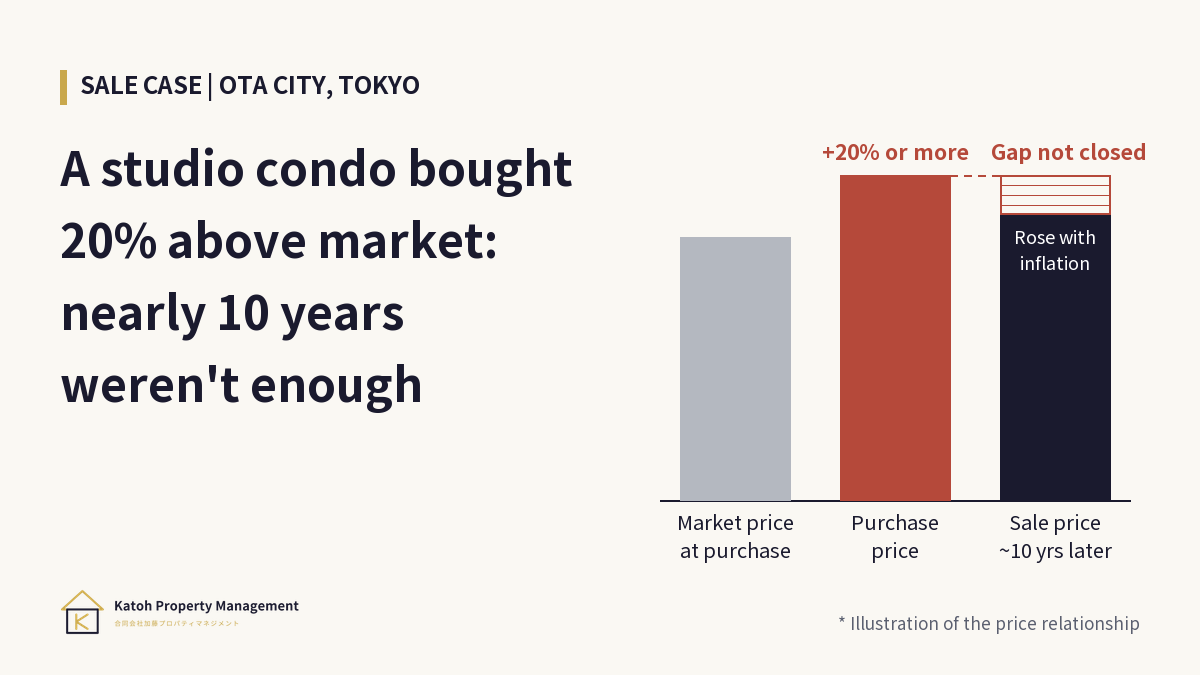
We recently helped sell an investment studio condominium (sold with the tenant in place) in Ota City, Tokyo, and the handover has been completed.
The seller had bought studio condominiums after being told they would save tax. They were what are often called loss-making properties, where loan repayments and expenses exceed the rental income.
Why does owning a studio bought for tax savings make it harder to buy your own home?
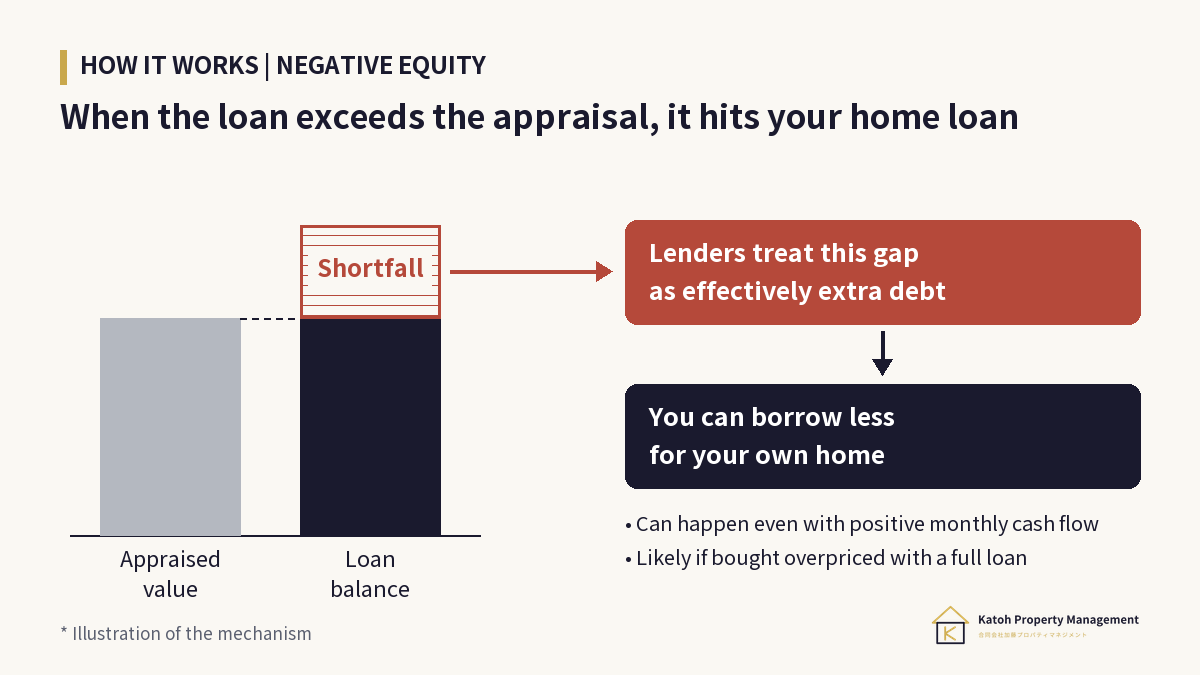
Two things affect your home loan screening: negative equity, where the loan balance exceeds the property’s appraised value, and lower income on paper because of the tax losses.
Keeping such properties can cause problems when you finally want to buy a home. Studio condominiums tend to be appraised low as collateral, and the loan balance is often larger than the property’s value. Lenders treat that difference as a debt burden. In addition, the tax losses that reduce your tax also lower the income lenders look at in screening. As a result, you may not be able to borrow as much as you hoped for your own home.
If the monthly cash flow is positive, is your home loan safe?
Not necessarily. Even with positive monthly cash flow, a loan balance above the appraised value can affect your home loan screening.
With a long loan term at a time of low interest rates, monthly repayments are small, so even an overpriced property can show positive cash flow. But if the balance exceeds the appraised value, the difference is still seen as a debt burden. Some lenders also count only part of the rental income, so a property that is slightly positive in your own accounts may be judged negative in screening. Screening methods differ from lender to lender.
Why did this sale require the seller to add their own money?
The property had been bought at 20% or more above the market price, and nearly 10 years of price rises with inflation were not enough to close that gap.
Compared with past transactions in the same building, this property had been bought at 20% or more above the market price. Unfortunately, the seller had been taken advantage of by a studio condo sales company. Over the nearly 10 years since the purchase, condominium prices in Tokyo rose, partly due to inflation. Even so, they did not rise enough to make up for the initial 20% premium.
We marketed the property to sell it for as much as possible, but in the end the sale proceeds were not enough to repay the loan, and the seller decided to sell and cover the difference from their own funds. What you overpay at the start is not easily recovered, even when the market rises. That is why deciding to cut your losses is so hard.
Even so, the seller was able to sell all of the properties they owned and is now free of that debt, one step closer to buying their own home.
Should you avoid studio condo investment altogether?
Not all of it is bad. Some properties have worked out and are now worth more than was paid.
However, buying a property with a large seller’s margin just because it was recommended, or without understanding how it works, is not something we recommend. It is tempting to think “if I keep it, the loan will go down and it will work out eventually,” but in practice many people run into trouble when they want to buy a home or sell.
If you are planning to buy your own home, please think carefully, before taking out a loan for an investment property, about how that borrowing will affect your future home loan.
What if you want to sort out an overpriced property, or find a reasonably priced investment property?
Please feel free to contact us about either. Whether you want to sell an overpriced property even at a loss, or are looking for an investment property priced reasonably for the market, we can help.
We do not buy properties to resell them, and we have no tie-ups with any particular sales company. From a neutral position, we introduce properties that appear reasonably priced in light of the market. For help, see our pages for sellers and buyers.
This English article is a translation for reference; the Japanese version is the original.